
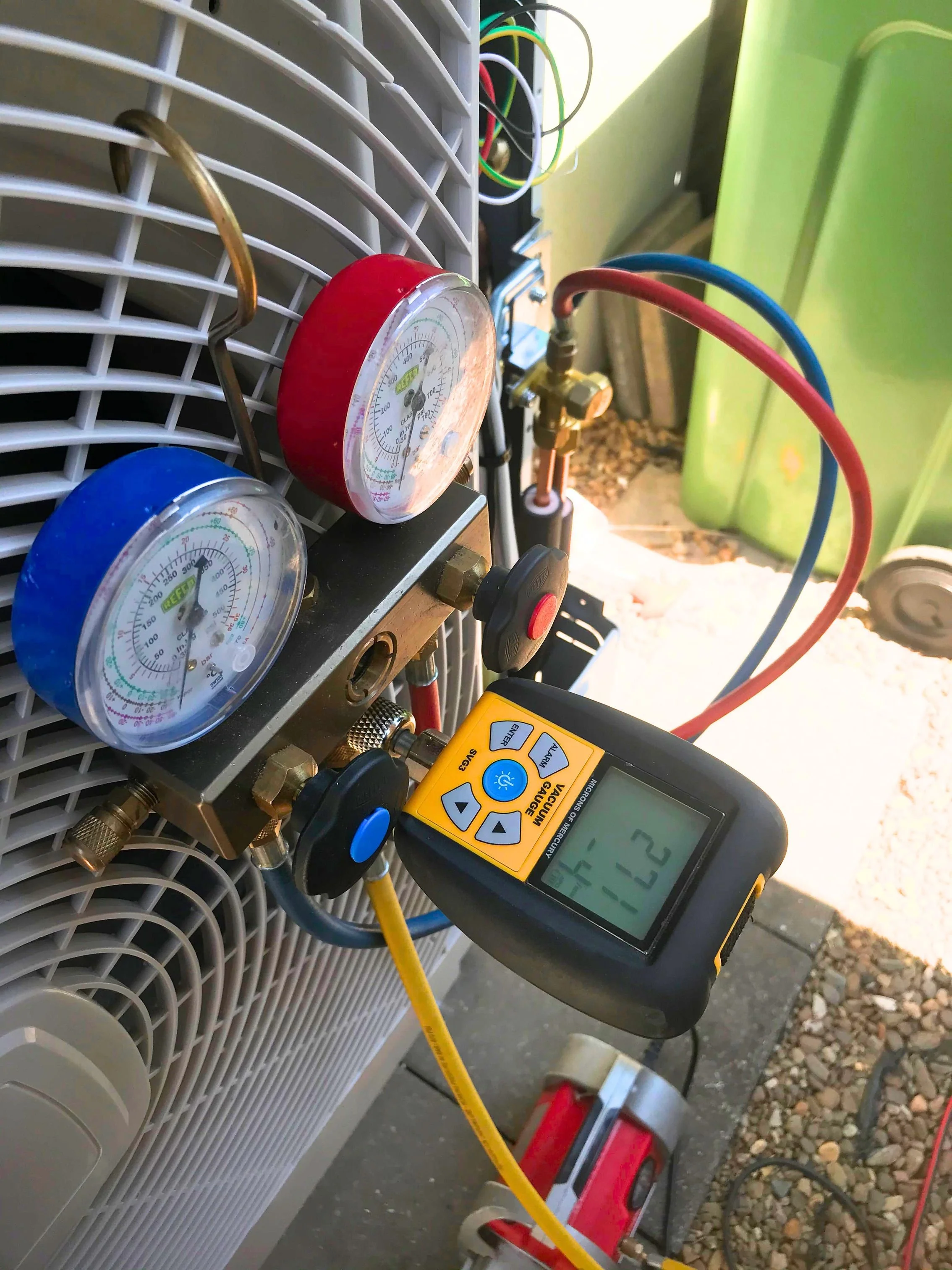
Let’s Clear the Air on Refrigerant, Re-Gassing & Leak Testing
If we had a dollar for every phone call asking us to “just top up the gas” lately… well, summer in HVAC would still be chaos — just slightly better funded 😅
With the heat cranking up, we’ve been inundated with requests to re-gas or top up air conditioning systems. Some come from quick online searches, and others stem from advice clients may have received elsewhere in the industry. Either way, there’s clearly some confusion — so we wanted to take the time to explain things properly.
The short version?
“Topping up” refrigerant without finding and fixing a leak is not allowed in Australia.
Not by us. Not by anyone doing the right thing.
Now let’s explain why.
What does “topping up” actually mean?
“Topping up” refers to adding refrigerant to an air conditioning or refrigeration system without first checking for, identifying, and repairing any leaks.
If your system is low on refrigerant, it hasn’t magically disappeared — refrigerant only escapes if there’s a leak somewhere in the system.
Under Australian refrigerant handling laws and codes of practice, adding refrigerant to a system that may be leaking is illegal.
Why topping up refrigerant isn’t allowed
1. It’s bad for the environment
Air conditioners have refrigerant in them. If these gases escape into the atmosphere, they:
Damage the ozone layer
Contribute to global warming
Increase harmful UV radiation reaching the earth
The ozone layer protects life on Earth. UV exposure is linked to skin cancer, genetic damage, and immune suppression — so this isn’t just red tape, it’s environmental protection with real consequences.
Australia is a signatory to the Montreal Protocol, an international agreement aimed at reducing ozone-depleting substances. Our refrigerant laws exist to uphold that commitment.
2. It’s illegal — with serious penalties
Under the Ozone Protection and Synthetic Greenhouse Gas Management Act, knowingly releasing refrigerant or topping up a leaking system can result in fines of:
Up to $63,000 for individuals
Up to $315,000 for businesses
Only approved ARC-licensed technicians are legally allowed to handle and trade refrigerant in Australia — and they are required by law to follow the refrigerant handling codes of practice.
3. It can damage your system (and create safety risks)
If refrigerant is added without properly identifying what’s already in the system, there’s a real risk of mixing refrigerants. This can:
Reduce system efficiency
Cause performance issues
Create safety hazards
Lead to costly damage or complete system failure
What the law actually says
The Australian codes of practice are very clear:
“The addition of refrigerant to an existing system charge to ‘top up’ must not be carried out.”
(Australian Automotive Code of Practice)Technicians must not service equipment unless it can be returned to service in a leak-free condition.
(Refrigerant Handling Code of Practice)
In simple terms:
👉 No leak test = no refrigerant added.
So what should happen if your system is low on refrigerant?
A compliant and responsible process looks like this:
Leak testing to identify whether refrigerant is escaping
Repairing the leak, if one is found. This may involve repairing the affected area, replacing a faulty component, or replacing the section of the system where the leak is located, where practical and cost-effective.
Only then replacing refrigerant
Ensuring the system is returned to service leak-free
Leak testing is not a quick or cheap process — it requires time, specialised equipment, and licensed technicians — but it’s the only legal and environmentally responsible way to do the job.
Repair vs replacement — why replacement is sometimes recommended
In some cases, once a leak is found, repair may not make financial sense. Factors include:
Age of the system
Overall condition
Accessibility of the leak
Type of refrigerant used
Cost of repair versus long-term reliability
When replacement is recommended, it’s not a sales tactic — it’s about avoiding repeated costs, ongoing leaks, and future failures. Where possible, we outline both repair and replacement options so you can clearly understand the pros, costs, and long-term implications of each, and make the most informed decision moving forward. Beware of “cheap fixes”
If someone offers to:
“Just top it up”
Re-gas without leak testing
Do it cheaper because “everyone does it”
…they are either misinformed or knowingly doing the wrong thing.
Unfortunately, the consequences often fall on the homeowner — not the cowboy who’s already driven off.
Our approach at Air Volt
We don’t cut corners when it comes to refrigerant handling, compliance, or environmental responsibility. We follow Australian regulations, use licensed technicians, and provide transparent advice — even when it’s not the easiest or cheapest answer.
Our goal is to help you make informed decisions about your system, your costs, and your long-term comfort.
If you have questions about refrigerant, leak testing, or whether repair or replacement is the right option for your system, we’re always happy to explain.
Because when it comes to air conditioning — doing it properly matters.